Weekly Wall Street Analyst Calls Recap
Street Calls of the Week
This weekly roundup delivers the essential insights from leading Wall Street analysts over the past seven days. InvestingPro subscribers gain exclusive early access to these influential AI-powered analyst opinions that can significantly influence market directions. Consider upgrading for premium market intelligence.
Costco
What happened? Roth Capital recently shifted its rating on Costco Wholesale Corp (NASDAQ:COST) to Sell, establishing a price target of $769.
Key Summary: Although Costco exceeded first-quarter earnings expectations, underlying performance indicators are deteriorating amid rising competitive pressures and an elevated valuation that signals substantial potential downside.
Detailed Analysis: Despite posting better-than-expected results for the first quarter, Roth analysts detect vulnerabilities in Costco’s business model. Membership renewal rates continue to decline, reaching 89.7% globally and 92.2% in the US and Canada. Paid household growth has slowed dramatically to just 400,000 quarter-over-quarter, even as new warehouse locations open. Adjusting for these expansions, analysts estimate actual membership numbers are contracting. Comparable store traffic growth eased to 3.1% year-over-year, while mobile app downloads dropped sharply following the Black Friday rush. These trends suggest the retail giant’s competitive advantages are eroding.
Competitors are mounting a serious challenge. Walmart is aggressively investing in its Sam’s Club division, planning to accelerate store openings to 15 annually after years of minimal expansion. Consumer review data from Yelp indicates Sam’s Club locations gaining popularity while Costco’s ratings soften. BJ’s Wholesale Club is also expanding aggressively with 14 new clubs targeted for fiscal 2025 and significantly increased capital expenditures. Demographic shifts, including smaller average household sizes now at 2.5 people and delayed household formation, add structural headwinds previously masked by pandemic-related behaviors.
Costco’s valuation appears overstretched at 27 times enterprise value to next-twelve-months EBITDA—far exceeding its 10-year historical average—and 43 times forward earnings. Comparable peers like BJ’s trade at roughly half these multiples. With risks tilted heavily toward the downside, analysts reduced their price target from $906 to $769. In the current environment, any hint of underperformance could spark a sharp valuation reassessment.
Crescent Energy
What happened? Evercore ISI initiated coverage on Crescent Energy Co (NYSE:CRGY) with an Outperform rating and a $13 price target.
Key Summary: The completion of Crescent’s acquisition of VTLE positions it as a top-ten U.S. independent oil and gas producer. Despite share price struggles, the company may transition from acquirer to asset seller.
Detailed Analysis: Crescent Energy’s recent acquisition of VTLE propels it into the ranks of the top ten independent producers in the U.S., with production nearing 400 thousand barrels of oil equivalent per day across a diversified portfolio spanning three basins, bolstered by an expanded presence in the Permian. Evercore projects returns exceeding 2 times cash-on-cash from the deal, fully supported by VTLE’s current output, which immediately enhances free cash flow and net asset value per share. Crescent’s expertise shines in optimizing acquired assets: reducing rig counts from four to one or two, capturing $90-100 million in synergies—likely conservative—through improved drilling techniques, cost reductions, and enhanced marketing strategies. This builds on their track record in the Eagle Ford, where wells outperform peers by 20% at lower costs.
However, amid the challenging 2025 oil market downturn, CRGY shares have declined significantly year-to-date, pressured by increased debt and softening commodity prices during a contested bidding process. Private market valuations for similar assets significantly outpace public exploration and production equities, questioning the sustainability of the acquire-and-exploit strategy. Evercore anticipates Crescent may shift gears, potentially monetizing assets to realize value under its proven management team’s guidance.
Procter & Gamble
What happened? Jefferies upgraded Procter & Gamble Company (NYSE:PG) to Buy with a $179 price target.
Key Summary: A difficult 2025 sets the stage for robust growth in 2026 for P&G, with shares trading at attractive valuations relative to an improving earnings trajectory.
Detailed Analysis: Jefferies forecasts a tough fiscal 2025 for Procter & Gamble, transitioning to stronger performance in 2026, following recent 7% reductions in estimates for 2026 and 2027 earnings since the start of the year. Despite this, the stock trades at a compelling 20 times 2027 earnings—its lowest multiple since 2018 when revenue growth stagnated near zero—well below the 10-year average of 22 times.
Jefferies’ $179 price target applies a 24 times multiple—one turn above the five-year average—to their $7.47 per share estimate for 2027 earnings, anticipating accelerating growth momentum. History shows such depressed valuations rarely persist once underlying fundamentals strengthen.
PayPal
What happened? Morgan Stanley downgraded PayPal Holdings Inc (NASDAQ:PYPL) to Underweight with a $51 price target.
Key Summary: PayPal faces intensifying AI-driven disruptions and decelerating growth, prompting the downgrade.
Detailed Analysis: Morgan Stanley’s downgrade highlights four critical challenges eroding PayPal’s competitive edge. Its branded checkout solution continues losing market share due to slow, cumbersome improvements that fail to eliminate friction, allowing agile competitors to capture ground while imposing pricing pressures.
Emerging agentic commerce powered by AI represents an existential threat, with PayPal lagging in integrations with leading platforms like ChatGPT, falling behind rivals such as Stripe and Adyen. Venmo’s peer-to-peer monetization opportunities are closing as competition intensifies and its user base ages. Earnings outlook deteriorates with rising operating expenses for marketing and product fixes offsetting share repurchases; analysts project transaction margin expansion slowing to just 3.3% by 2027 from previous high-single-digit expectations.
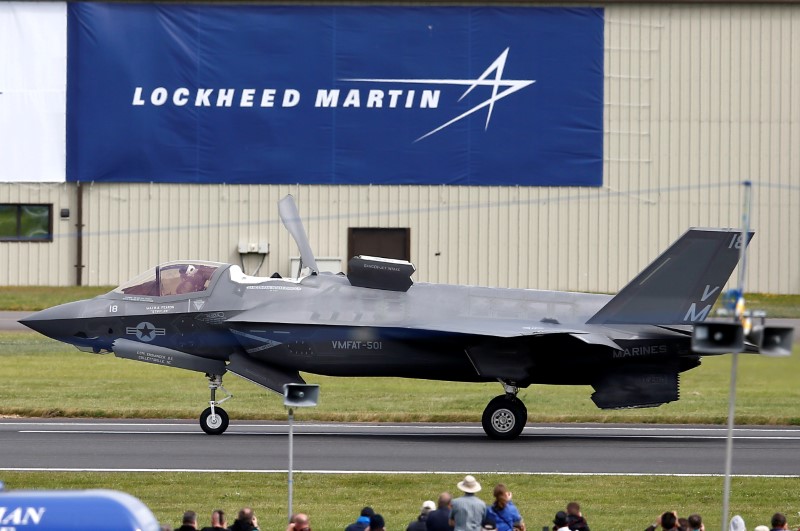
Lockheed Martin
What happened? JPMorgan downgraded Lockheed Martin Corporation (NYSE:LMT) to Neutral with a $515 price target.
Key Summary: Cash flow concerns, particularly a significant 2027 pension funding obligation, prompt the downgrade and limit growth potential.
Detailed Analysis: JPMorgan moves to Neutral on Lockheed Martin after the stock’s sharp underperformance this year, though their cash flow projections remain below consensus, avoiding a more bearish stance. The critical issue emerges in 2027: substantial pension contributions that severely constrain free cash flow expansion absent extraordinary working capital improvements. Consensus expectations of 8% growth appear overly optimistic. JPMorgan’s $515 target assumes a 2028 recovery, based on 5.5% yield on $30 per share free cash flow, discounted appropriately. While Missiles and Fire Control (about 20% of revenue) should see sustained growth, other segments face revenue pressures and inconsistent execution. F-35 production stabilization at 156 aircraft annually provides some reassurance.